Showing posts with label Agriculture. Show all posts
Showing posts with label Agriculture. Show all posts
Sunday, August 11, 2013

Sunday, April 8, 2012
Eco reusable bags
http://www.ecobags.com/Shopping_System_for_Two

Google images: "natural home produce bag"

| An ECO Shopping System for two people with a variety of bags for a range of applications...going to the grocery store, farmer's market, drug store, etc. It may be the end to plastic bag pile ups in your home! All bags are produced with natural, undyed cotton. | |
|
Google images: "natural home produce bag"


Harvesting Bag
A favorite of Territorial Seed Company's employees. This lightweight, yet durable, roomy and versatile bag, offers 3 carrying options: comfortable handles to hold, or a strap for over the shoulder or around the waist. With the sturdy, open-weave mesh, you can even rinse the produce right in the bag and allow it to drip dry. Great for beach combing and clamming too! Made of hard-wearing polypropylene and pvc. Measures 9 1/2 inches in diameter, 15 1/2 inches tall.
Wednesday, February 1, 2012
Using an Insinkerator to create a rich compost soil in 3 days instead of 3 weeks or 3 months......
From Solar Cities: http://solarcities.blogspot.com/2011/09/using-insinkerator-to-create-rich.html
In previous posts Solar CITIES originated and championed the use of an Insinkerator "Food-Waste-to-Feedstock Preparation Device" (a.k.a. "garbage disposal") to break down kitchen waste into an ideal slurry for home and community scale anaerobic biogas digestors.
Today we explore the use of the Insinkerator as the essential technology for extremely rapid aerobic composting, enabling the use of virtually all organic material found in the home waste stream and reducing the time from kitchen garbage to perfect soil from three months to as little as three days.
The Insinkerator thus provides the feed for a revolution in the way we treat municipal wastes, making it inexcusable for any organic material to be trucked to landfill or to be left to rot in our streets, sewers, rivers, lakes or oceans.
Removing the barriers to urban and suburban composting
For those of us who have been composting for decades - particularly for those of us who have been doing it in the urban environment - the idea that there should be any organic waste at all left rotting in garbage bags and garbage bins, attracting flies and vermin and requiring a noisy, snorting, smoke belching, fossil fuel using garbage truck to collect it and haul it off to a toxic landfill seems ludicrous.
How simple the world would be, we preach to our choir, if everybody would see the value of the elements in their daily waste, and take ownership over them, and allow the god-given biological processes this planet offers to safely and effectively transform that which we throw away into life giving nutrient rich soil.
But we have to acknowledge the frustrations and fears of our compost-reluctant fellows (among them most members of my own family, for whom I've built many an ultimately unused compost bin over the years), most of whom were discouraged by the labor requirements of properly maintaining a compost bin, and who were told by municipalities that they must not put eggs, cheese, dairy products, or meat or bones into their bins (lest they attract animals or create smells!) and for whom the extra burden of "separating their organic wastes" and maintaining good cover material and turning and shoveling turned the adventure into a waste of precious time.
And then there was the issue of just how long it takes to turn daily generated rotting organic muck into useful compost -- for many the swiftest reasonable benchmark was three months -- a hard sell in the urban landscape where space as well as time are at a premium.
A popular gardening website, "Garden Composter" gives the following advice:
Worms to the rescue?
For those of us who have been "worm-posting" for decades, relying on the magic of the Annelida phylum to accelerate decomposition and soil formation, often on our city porches or right under our kitchen sinks, producing a fine black well structured humus from our kitchen waste and making a superior liquid compost from the worm castings (often called "worm tea") that can be directly applied to our kitchen garden, we know the waiting time can be reduced (to as short as 6 weeks, some claim) through our symbiotic love affairs with other members of the animal kingdom. However, one problem faced by the not-so-dedicated potential composter is the need to build and maintain a properly structured worm habitat (seehttp://www.composting101.com/worm-composting.html), another is that worms are said to be somewhat finicky eaters and most vermicomposting guidelines prohibit the feeding of citrus fruit rinds, tomatoes and onions and other "acidic" wastes as well as maintaining the usual prohibition against meat and dairy (see, for example, http://www.mamaswormcomposting.com/frequently-asked-questions.html). But hey, most of what I'm throwing away from my expensive juicer are the rinds of breakfast oranges and grapefruits, I have prodigious heaps of lemon and lime rinds mixed in with fish skin and bones from my "healthy heart" diet, and my whole-wheat pasta regimen demands tons of fresh tomatoes. Once again we reach the point where people come to think that kitchen wastes need to be sorted and this deters many from even starting down the waste-to-soil transformation path.
Temperature to the rescue?
For really quick composting, many organizations (seehttp://permaculture.org.au/2010/11/08/fast-hot-composting-system/) are recommending the "high temperature" compost solution, wherein the proper mix of food waste, dry grass/straw and animal manure (in a 3:2:1 ratio) can reduce composting time to a mere 3 weeks. The high temperatures come from the large number of aerobic bacterial consortia found in the animal manures (most compost piles will reach high temperatures regardless, but the animal manures accelerate and maintain the thermophilic activity). This is a wonderful solution but again, for the urban dweller the extra burden of collecting straw and animal manure can be the straw that break's the would-be composting camel's back.
Insinkerator to the rescue!

Our Solar CITIES experiments in Botswana (November 2010) and Tamera, Portugal (August 2011) have suggested a better way to compost. It is a way that is not only push-button easy but one that lets us adopt a devil-may-care, throw-it-all-down-the-kitchen-sink attitude that encourages rather than discourages the lazy gardener from composting.
It is the use of the Insinkerator food-waste preparation device (formerly known as "the humble garbage disposal") to break down ALL of our organic wastes into slurry for the compost bin.
The need for Jaws!
The notion is a simple one: neither worms nor fungi nor bacteria have any teeth. In the case of bacteria symbiosis and the benefits of mutualism led to a co-evolutionary compromise between large animals and microbes wherein the animals provided the mechanical power, through jaws and teeth (as well as some hydrolytic enzymes), to break down foodstuff to a manageable size, and the bacteria then provided the specialized proteins and processes to turn the chewed slurry into value added building blocks for repairing and building new animal tissue. Meanwhile, the annelids and many tiny members of the insect and arthropoda phyla awaited the end product of this animal/microbial relationship -- an easy to utilize digestate of manure (which they and the soil fungi and bacteria further prepared for plant roots to continue the cycle).
The problem with almost all compost piles based on food wastes instead of manure is that they lack jaws and teeth. It is no wonder that compost takes 3 to 6 months to complete -- weeks and weeks are "wasted" while fungi and bacteria and some hardy intermediate-sized insects struggle in the absence of animal jaws to mechanically or enzymatically break down our food processing and consumption residuals. So much of the literature on composting talks about intransigent materials like corn cobs, fruit rinds and pits and seeds, and meat and bones that can create a nuisance or take months to be broken down. Hardly anybody talks about the obvious solution: simply break them down before adding them to the compost pile! In other words, give the microbes and insects and other denizens of the nano-scale world a break!
The energy invested in breaking down your food waste is usually less than 30 watts a day (an Insinkerator normally pulls about 380 Watt-hrs and is only used for about 5 minutes per day, hence 380/(60/5) or 380/12 = 31 watts. A person riding a typical bicycle generator can comfortably generate 75 watt-hours so a 20 minute leisurely workout gives plenty of energy if you wanted to produce your own power for the Insinkerator on a daily basis; we tend to use solar panels for our electricity because we are lazy!). The perceived energy savings in not having to turn the compost pile are what tend to drive acceptance of the Insinkerator-to-compost solution -- normal urban and suburban dwellers don't seem to mind investing time and energy and money from their "normal" jobs in buying green consumer goods like solar panels, or in getting a work-out that also creates electricity but the thought of having to "maintain" a compost pile on a regular basis over many months drives many people away from the art and sport of making compost. With the addition of about 10 to 20 liters of water for the food scraps from a family of four (soapy dishwashing wastewater is fine to use) the Insinkerator effortlessly grinds down all the food waste at the press of a button into a liquid slurry.
We've explored two ways to use the Insinkerator slurry for compost. The first is to port the outflow of the insinkerator into a bucket and carry it out to the compost. The second is to port the outflow into a 40 mm pipe that carries it out to the garden or porch digestor automatically.
Since the slurry is about 50% water and 50% ground up food waste, compost bins that are located on porches or cement surfaces or compact or clay-rich soils without drainage need to be built over a drain or over a collection pan or bucket that can be ported to a drain or to the garden. Where compost bins are located over soils with good drainage this is not a problem; the water portion of the slurry tends to sink right in to the earth because the quantities are not excessive. In any event the water portion of the Insinkerator slurry is great for irrigation, particularly when it passes through compost.
The ground up food waste portion of the slurry is in a sense predigested -- it is immediately available for earthworms, insects, arthropods, fungi, protozoa and bacteria to turn into soil. Because it is broken down, the finishing part of the composting process can occur very rapidly -- in Tamera, where there were earthworms already present, we witnessed perfect black well structured soil being created in as little as two days in some patches and three days in others. In Botswana the ubiquitous ants made short work of the food waste so that it had all but disappeared in just a few days, carried away in Insinkerator-ground ant-sized bites to immediately become part of the soil structure.
Ants can't easily carry away peach pits or even pumpkin seeds from a normal compost bin, to say nothing of orange skins and banana peels. But in an Insinkerator fed compost heap they find everything already available at the appropriate scale.
In many wildlife lodges in Africa composting is forbidden and food waste is actually burned or trucked out to landfill using fossil fuels because of a very realistic fear that seeds of non-native or domestic food crops in the compost bin will germinate and disturb the ecologies of the last remaining wilderness areas, as well as disturbing the foraging patterns of local wildlife. But the insinkerator shreds and reduces the seeds and other waste materials to a form and size where seeds cannot germinate and where all materials are easily taken away or further broken down by local insects and by worms.
And as for the worms, which are notoriously acid-sensitive, the Insinkerator eliminates all concerns about what we feed them. Since people tend to be omnivores and tend to eat a relatively balanced diet (at least as acidity and alkalinity are concerned!) the catholic feeding of an Insinkerator at every meal with citrus and salad and beans and all sorts of fruits and vegetables and meat and dairy means that the resulting slurry is usually pH neutral. For this reason we have observed that worms are attracted to the Insinkerator slurry in our compost heaps and seem to be eating everything with no problem.
For the same reason the normal compost prohibition against animal products (meat, dairy and bones) no longer applies. Mixed in with all the vegetable wastes and ground up so finely the resultant slurry tends to have the optimal ratios of Nitrogen and Carbon recommended by composters (between 1:20 and 1:30) In any event the insects and microorganisms make short work of the proteins and fats in the slurry (which are essential for growth and for maintaining cell membranes) and there are no smells or odors associated with them to attract larger "vermin". And the fascinating thing about the slurry is that it doesn't seem to attract many flies. This is probably because there is almost no safe place for flies to lay their eggs or for maggots to develop.
We should keep in mind that in a normal compost bin with large food chunks flies and their maggots play an important role in breaking down the food scraps so that they can turn into soil. The maggots in particular weave all sorts of holes throughout the food waste chunks and munch down many of the larger food particles. With the Insinkerator serving that function maggots become superfluous. It seems they then get out-competed by more rapid decomposers. For anybody who eats a lot of meat who still worries about flies, simply covering the slurry with a bit of grass eliminates the chance that they will discover the compost heap at all.
Do we even need a compost bin?


We ran experiments in both Botswana and Tamera where we decided not to use a compost bin at all to see what would happen if we simply put the Insinkerator slurry directly on the garden. In both cases we observed complete removal (by ants and other insects in Botswana) or complete transformation into soil (by earthworms and other organisms) within three days. The primary function of the compost bin -- to concentrate the food scraps into a mass that permits thermophilic activity to perpetuate and that retains its heat of decomposition -- seems to be less necessary once the food is already pre-digested. By spreading the slurry around the pumpkins in Tamera, for example, and then covering the ground up food waste with a bit of straw or grass or leaf matter to block UV radiation, it appeared that we created a nicely aerated moist structure that attracted the worms and pill bugs and others wanting to make short work of the feedstock. What was left behind when we went through the area with our fingers each day was beautiful friable black soil with a wonderful smell. We didn't bother to disperse the food waste each day to new locations -- it seemed it might be enough to spread the new food waste on the old (with that thin layer of grass or carbonaceous matter in between) and each few days the earlier layer had turned into soil. The water drained down to the roots of the plants each time we poured slurry on the garden and it appeared as though the water fraction of the Insinkerator slurry, applied each day, might be able to completely replace any other forms of irrigation.
This warrants more study, of course, because we had to leave after only two trials and so the results are not statistically significant, but they are very compelling. Temperature of course plays an enormously important role and it is safe to say that during colder months of the year a compost bin (or certainly a compost pile) would be necessary to maintain the proper habitat for the organisms responsible for the decay into soil -- we have built an insulated compost bin in our backyard in Germany for year round composting and are quite confident that unlike other German families who must shut down their composting in the winter, going back to dumping food scraps in the municipal bin, ours will continue to operate, particularly because the Insinkerator gives the food scraps a head start. But even if it gets too cold for any exothermic activity, the extreme volume reduction that the Insinkerator permits will allow us to keep dumping food waste into the compost bin all winter with no appreciable buildup until we can get back to direct garden application in the spring.
If further trials continue to show the promise we experienced in Botswana and Portugal we might be able to recommend that, in certain cases, insinkerator slurry be ported directly into specific "micro-compost" locations in gardens during the warm months and that this become a new form of greywater irrigation and soil formation with composting occurring more or less in situ rather than in a distant compost heap or bin whose soil would then have to be carried out to the garden and applied manually. If this proves to be the case then a lot of the labor associated with composting might be removed and acceptance of composting might rise to a level where we really can consider shutting down landfills.
Cautions about applying fresh material directly to the garden
With this in mind I do not want to mislead people. In our experience at Tamera (albeit limited in time and scope) the earthworm and other biological activity was occurring right at the surface (even above the normal soil layer) in the slurry itself so that what we observed after three days was a well composed soil. Taking Mark's experience to heart, a better solution than applying the fresh slurry directly to the plants might be if we built the new soil adjacent to the plants, in micro-compost patches around the garden that have a chance to age before they get raked into the immediate soil around the roots. Might that avoid the problem of possibly retarded plant growth?
We should also investigate the effect over time of "fresh" material on plants that are already well established (like the pumpkins next to which I was conducting my experiments).
I am taking my cues for these investigations partially from experiments done by Dr Anand Karve in Pune India at ARTI who told me "everybody thinks they should be feeding the plant roots when we have found it is better to feed the bacteria in the soil which in turn feed the plants. We tried grinding up fresh leaves and spreading them on healthy unturned soil that had an intact microbial population and got accelerated plant growth."
Karve's observation is that we have sterilized the soil through ploughing and turning, exposing it to too much UV radiation and heat, and we put the nail in the coffin by applying synthetic and therefore unbalanced fertilizers that disrupt a healthy soil microbe consortia. Karve champions no-till farming methods that allow the bacteria and other soil organisms to the work of supplying nutrients to the plants.
When we were in India Karve also told us that he observed that many leaves of plants drip sugar and nutrients to the soil below and that he suspects it has little to do with attracting pollinators or seed dispersers. He believed it had more to do with a symbiosis in which the plants are actively "feeding" their symbiotic bacteria in the soil. So this is something that perhaps bears more investigation, particularly taking into account Mark David Heath's observations and the historical record from the past century that fresh sheet composting delays plant growth.
Perhaps there is some subtle interaction we can tease out that allows strategic placement of "fresh" material in certain locations. We are basing some of our assumptions on the idea that in the pre-hominid era there would have been little "natural" cured composting (most plants would have endured fresh fruitfall and in situ rotting with occasional manuring). On the other hand, perhaps "nature" isn't the best model for attempting high productivity geared to human population demands.
We are certainly in agreement that placing fresh compost on plants can have a deleterious effect -- not the least of which is the "souring" of leaves, the blockage of effective photosynthesis, creation of anaerobia, possible overheating of plants through aerobic exothermia, etc.
We are grateful for the insights and experience and cautions that friends and colleagues like Mark offer, so please feel free to leave comments if you are reading this and have questions or insights to share. We look forward to collaborating on ever more nuanced understandings of the miracle that is our natural world, and looking into ways to improve the adoption rate of composting systems is certainly key to improving our cooperation with our non-human fellow travelers on planet Earth!
Of course we at Solar CITIES favor capturing the energy from food scraps ground up by the Insinkerator in home and community biogas digestors whose digestate is then used to fertilizer the garden and build soil. But there are many situations where winning acceptance of small scale biogas solutions will be harder than winning acceptance of more efficient composting regimes, and insofar as the Insinkerator has been now observed to work with nature to produce rich soil from food scraps in as little as three days we encourage this new Insinkerator/Composting symbiosis and will continue to do experiments that can establish its superiority to the normal methods.
We hope you will join us in these efforts to replace the idea that organic wastes are problems with data that proves they are vital solutions to our food, water, health and energy security.
 |
| Culhane explains to Tamera's compost experts how the fertilizer from an insinkerator fed biogas digestor can produce a superior compost to aerobic processes that use food scraps. Nonetheless, the Insinkerator's output can also be directly applied to a compost bin, or even the garden itself, since it "predigests" the feedstock for rapid decomposition into soil. |
 |
| Culhane demonstrates the use of the Insinkerator as the "jaws and teeth" of the artificial sacred cow that will produce biogas from kitchen scraps for cooking during Portugal's cloudy days. The Scheffler solar coking mirror used to cook on sunny days in Tamera is shown in the background. |
 |
| A perfect trio: A biogas digestor, an Insinkerator and a solar cooking Scheffler mrror outside the kitchen at Tamera Eco-Village in Portugal. |
Today we explore the use of the Insinkerator as the essential technology for extremely rapid aerobic composting, enabling the use of virtually all organic material found in the home waste stream and reducing the time from kitchen garbage to perfect soil from three months to as little as three days.
The Insinkerator thus provides the feed for a revolution in the way we treat municipal wastes, making it inexcusable for any organic material to be trucked to landfill or to be left to rot in our streets, sewers, rivers, lakes or oceans.
 |
| Three days after pouring Insinkerator slurry directly on the ground by the pumpkin patch and covering with a light cover of grass and straw to protect from UV we find a perfect friable soil. |
Removing the barriers to urban and suburban composting
For those of us who have been composting for decades - particularly for those of us who have been doing it in the urban environment - the idea that there should be any organic waste at all left rotting in garbage bags and garbage bins, attracting flies and vermin and requiring a noisy, snorting, smoke belching, fossil fuel using garbage truck to collect it and haul it off to a toxic landfill seems ludicrous.
How simple the world would be, we preach to our choir, if everybody would see the value of the elements in their daily waste, and take ownership over them, and allow the god-given biological processes this planet offers to safely and effectively transform that which we throw away into life giving nutrient rich soil.
But we have to acknowledge the frustrations and fears of our compost-reluctant fellows (among them most members of my own family, for whom I've built many an ultimately unused compost bin over the years), most of whom were discouraged by the labor requirements of properly maintaining a compost bin, and who were told by municipalities that they must not put eggs, cheese, dairy products, or meat or bones into their bins (lest they attract animals or create smells!) and for whom the extra burden of "separating their organic wastes" and maintaining good cover material and turning and shoveling turned the adventure into a waste of precious time.
And then there was the issue of just how long it takes to turn daily generated rotting organic muck into useful compost -- for many the swiftest reasonable benchmark was three months -- a hard sell in the urban landscape where space as well as time are at a premium.
A popular gardening website, "Garden Composter" gives the following advice:
This may work for the dedicated gardener but the notion of capping off one compost heap and starting another intimidates and often discourages the city dweller and even the suburban weekend green-thumb. Most people evincing a concern for "the environment" will only tolerate at most one compost bin around the house and the notion of having to stop feeding it for months so it can turn into soil makes many simply revert back to dumping their organic wastes in the trash bin to make them "somebody else's problem" (it's what I pay my taxes for, right?).Time Limit for Creating the Compost Heap
Unless you have a compost bin you easily fill quickly, you'll need to set yourself a time limit for creating the compost heap. And, you will need to stick to it! The very best way to do this, is to keep a record of when you started your compost pile. Then, according to available space and time you expect to take to fill it, assign yourself a date when you will stop putting garden waste on that heap.We have various compost heaps of different sizes from 1/2m cubed to 1m cubed. For the smaller compost piles I give myself 3 months in which to create the pile. For the larger, we give them 6 months of 'creation'. Once that date is reached we cap off the compost heap and start creating another.
Worms to the rescue?
For those of us who have been "worm-posting" for decades, relying on the magic of the Annelida phylum to accelerate decomposition and soil formation, often on our city porches or right under our kitchen sinks, producing a fine black well structured humus from our kitchen waste and making a superior liquid compost from the worm castings (often called "worm tea") that can be directly applied to our kitchen garden, we know the waiting time can be reduced (to as short as 6 weeks, some claim) through our symbiotic love affairs with other members of the animal kingdom. However, one problem faced by the not-so-dedicated potential composter is the need to build and maintain a properly structured worm habitat (seehttp://www.composting101.com/worm-composting.html), another is that worms are said to be somewhat finicky eaters and most vermicomposting guidelines prohibit the feeding of citrus fruit rinds, tomatoes and onions and other "acidic" wastes as well as maintaining the usual prohibition against meat and dairy (see, for example, http://www.mamaswormcomposting.com/frequently-asked-questions.html). But hey, most of what I'm throwing away from my expensive juicer are the rinds of breakfast oranges and grapefruits, I have prodigious heaps of lemon and lime rinds mixed in with fish skin and bones from my "healthy heart" diet, and my whole-wheat pasta regimen demands tons of fresh tomatoes. Once again we reach the point where people come to think that kitchen wastes need to be sorted and this deters many from even starting down the waste-to-soil transformation path.
Temperature to the rescue?
For really quick composting, many organizations (seehttp://permaculture.org.au/2010/11/08/fast-hot-composting-system/) are recommending the "high temperature" compost solution, wherein the proper mix of food waste, dry grass/straw and animal manure (in a 3:2:1 ratio) can reduce composting time to a mere 3 weeks. The high temperatures come from the large number of aerobic bacterial consortia found in the animal manures (most compost piles will reach high temperatures regardless, but the animal manures accelerate and maintain the thermophilic activity). This is a wonderful solution but again, for the urban dweller the extra burden of collecting straw and animal manure can be the straw that break's the would-be composting camel's back.
Insinkerator to the rescue!
 |
| The Insinkerator Evolution 100 unit kindly donated to Solar CITIES by Emerson Electronics (USA parent company of Insinkerator) for our deployment at the Tamera Solar Test Field. Unlike the Evolution 200 which has sophisticated electronics that need perfectly regulated sine wave electricity, the 100 series can handle the vagaries of renewable energy producing electricity without expensive pure sine inverters and is ideal for developing country applications. |
 |
| The children at Tamera learn how their food scraps can be turned into good soil within 3 days and are encouraged to scrape their plates into the Insinkerator. |

 |
| No need for turning the compost; the Insinkerator turns the food into a predigested slurry that annelid worms and insects and microbes and fungi and protozoans can turn directly into soil within days rather than months. |
Our Solar CITIES experiments in Botswana (November 2010) and Tamera, Portugal (August 2011) have suggested a better way to compost. It is a way that is not only push-button easy but one that lets us adopt a devil-may-care, throw-it-all-down-the-kitchen-sink attitude that encourages rather than discourages the lazy gardener from composting.
It is the use of the Insinkerator food-waste preparation device (formerly known as "the humble garbage disposal") to break down ALL of our organic wastes into slurry for the compost bin.
The need for Jaws!
The notion is a simple one: neither worms nor fungi nor bacteria have any teeth. In the case of bacteria symbiosis and the benefits of mutualism led to a co-evolutionary compromise between large animals and microbes wherein the animals provided the mechanical power, through jaws and teeth (as well as some hydrolytic enzymes), to break down foodstuff to a manageable size, and the bacteria then provided the specialized proteins and processes to turn the chewed slurry into value added building blocks for repairing and building new animal tissue. Meanwhile, the annelids and many tiny members of the insect and arthropoda phyla awaited the end product of this animal/microbial relationship -- an easy to utilize digestate of manure (which they and the soil fungi and bacteria further prepared for plant roots to continue the cycle).
The problem with almost all compost piles based on food wastes instead of manure is that they lack jaws and teeth. It is no wonder that compost takes 3 to 6 months to complete -- weeks and weeks are "wasted" while fungi and bacteria and some hardy intermediate-sized insects struggle in the absence of animal jaws to mechanically or enzymatically break down our food processing and consumption residuals. So much of the literature on composting talks about intransigent materials like corn cobs, fruit rinds and pits and seeds, and meat and bones that can create a nuisance or take months to be broken down. Hardly anybody talks about the obvious solution: simply break them down before adding them to the compost pile! In other words, give the microbes and insects and other denizens of the nano-scale world a break!
The energy invested in breaking down your food waste is usually less than 30 watts a day (an Insinkerator normally pulls about 380 Watt-hrs and is only used for about 5 minutes per day, hence 380/(60/5) or 380/12 = 31 watts. A person riding a typical bicycle generator can comfortably generate 75 watt-hours so a 20 minute leisurely workout gives plenty of energy if you wanted to produce your own power for the Insinkerator on a daily basis; we tend to use solar panels for our electricity because we are lazy!). The perceived energy savings in not having to turn the compost pile are what tend to drive acceptance of the Insinkerator-to-compost solution -- normal urban and suburban dwellers don't seem to mind investing time and energy and money from their "normal" jobs in buying green consumer goods like solar panels, or in getting a work-out that also creates electricity but the thought of having to "maintain" a compost pile on a regular basis over many months drives many people away from the art and sport of making compost. With the addition of about 10 to 20 liters of water for the food scraps from a family of four (soapy dishwashing wastewater is fine to use) the Insinkerator effortlessly grinds down all the food waste at the press of a button into a liquid slurry.
We've explored two ways to use the Insinkerator slurry for compost. The first is to port the outflow of the insinkerator into a bucket and carry it out to the compost. The second is to port the outflow into a 40 mm pipe that carries it out to the garden or porch digestor automatically.
Since the slurry is about 50% water and 50% ground up food waste, compost bins that are located on porches or cement surfaces or compact or clay-rich soils without drainage need to be built over a drain or over a collection pan or bucket that can be ported to a drain or to the garden. Where compost bins are located over soils with good drainage this is not a problem; the water portion of the slurry tends to sink right in to the earth because the quantities are not excessive. In any event the water portion of the Insinkerator slurry is great for irrigation, particularly when it passes through compost.
The ground up food waste portion of the slurry is in a sense predigested -- it is immediately available for earthworms, insects, arthropods, fungi, protozoa and bacteria to turn into soil. Because it is broken down, the finishing part of the composting process can occur very rapidly -- in Tamera, where there were earthworms already present, we witnessed perfect black well structured soil being created in as little as two days in some patches and three days in others. In Botswana the ubiquitous ants made short work of the food waste so that it had all but disappeared in just a few days, carried away in Insinkerator-ground ant-sized bites to immediately become part of the soil structure.
Ants can't easily carry away peach pits or even pumpkin seeds from a normal compost bin, to say nothing of orange skins and banana peels. But in an Insinkerator fed compost heap they find everything already available at the appropriate scale.
In many wildlife lodges in Africa composting is forbidden and food waste is actually burned or trucked out to landfill using fossil fuels because of a very realistic fear that seeds of non-native or domestic food crops in the compost bin will germinate and disturb the ecologies of the last remaining wilderness areas, as well as disturbing the foraging patterns of local wildlife. But the insinkerator shreds and reduces the seeds and other waste materials to a form and size where seeds cannot germinate and where all materials are easily taken away or further broken down by local insects and by worms.
And as for the worms, which are notoriously acid-sensitive, the Insinkerator eliminates all concerns about what we feed them. Since people tend to be omnivores and tend to eat a relatively balanced diet (at least as acidity and alkalinity are concerned!) the catholic feeding of an Insinkerator at every meal with citrus and salad and beans and all sorts of fruits and vegetables and meat and dairy means that the resulting slurry is usually pH neutral. For this reason we have observed that worms are attracted to the Insinkerator slurry in our compost heaps and seem to be eating everything with no problem.
For the same reason the normal compost prohibition against animal products (meat, dairy and bones) no longer applies. Mixed in with all the vegetable wastes and ground up so finely the resultant slurry tends to have the optimal ratios of Nitrogen and Carbon recommended by composters (between 1:20 and 1:30) In any event the insects and microorganisms make short work of the proteins and fats in the slurry (which are essential for growth and for maintaining cell membranes) and there are no smells or odors associated with them to attract larger "vermin". And the fascinating thing about the slurry is that it doesn't seem to attract many flies. This is probably because there is almost no safe place for flies to lay their eggs or for maggots to develop.
We should keep in mind that in a normal compost bin with large food chunks flies and their maggots play an important role in breaking down the food scraps so that they can turn into soil. The maggots in particular weave all sorts of holes throughout the food waste chunks and munch down many of the larger food particles. With the Insinkerator serving that function maggots become superfluous. It seems they then get out-competed by more rapid decomposers. For anybody who eats a lot of meat who still worries about flies, simply covering the slurry with a bit of grass eliminates the chance that they will discover the compost heap at all.
Do we even need a compost bin?
 |
| Culhane demonstrates how easy it is to simply pour the Insinkerator slurry directly on the garden, in many cases eliminating the need for a compost bin. |
 |
| Culhane shows how the Insinkerator slurry can be used as the primary form of irrigation in the garden with the liquids passing directly to the plant roots while the solids remain above to be turned into soil within days. |
 |
| A light covering of straw or grass keeps the solids moist and dark, encouraging worms to come an have at them. Unlike normal compost and vermicompost situations there is no restriction on what you feed the compost once it has all been ground together using the Insinkerator. pH is generally neutral and the carbon to nitrogen ratio more or less optimal even when feeding meat and dairy products into the mix. |

 |
| The resulting soil, after only three days of in situ composting, has great friable structure, is rich in worms and worm castings, has a nice smell and is already available to the plant without turning or carrying. |

 |
| Even with a large volume of citrus peels and tomato waste the worms appear happy in this soil, which they are co-creating right where it is needed most. |
We ran experiments in both Botswana and Tamera where we decided not to use a compost bin at all to see what would happen if we simply put the Insinkerator slurry directly on the garden. In both cases we observed complete removal (by ants and other insects in Botswana) or complete transformation into soil (by earthworms and other organisms) within three days. The primary function of the compost bin -- to concentrate the food scraps into a mass that permits thermophilic activity to perpetuate and that retains its heat of decomposition -- seems to be less necessary once the food is already pre-digested. By spreading the slurry around the pumpkins in Tamera, for example, and then covering the ground up food waste with a bit of straw or grass or leaf matter to block UV radiation, it appeared that we created a nicely aerated moist structure that attracted the worms and pill bugs and others wanting to make short work of the feedstock. What was left behind when we went through the area with our fingers each day was beautiful friable black soil with a wonderful smell. We didn't bother to disperse the food waste each day to new locations -- it seemed it might be enough to spread the new food waste on the old (with that thin layer of grass or carbonaceous matter in between) and each few days the earlier layer had turned into soil. The water drained down to the roots of the plants each time we poured slurry on the garden and it appeared as though the water fraction of the Insinkerator slurry, applied each day, might be able to completely replace any other forms of irrigation.
This warrants more study, of course, because we had to leave after only two trials and so the results are not statistically significant, but they are very compelling. Temperature of course plays an enormously important role and it is safe to say that during colder months of the year a compost bin (or certainly a compost pile) would be necessary to maintain the proper habitat for the organisms responsible for the decay into soil -- we have built an insulated compost bin in our backyard in Germany for year round composting and are quite confident that unlike other German families who must shut down their composting in the winter, going back to dumping food scraps in the municipal bin, ours will continue to operate, particularly because the Insinkerator gives the food scraps a head start. But even if it gets too cold for any exothermic activity, the extreme volume reduction that the Insinkerator permits will allow us to keep dumping food waste into the compost bin all winter with no appreciable buildup until we can get back to direct garden application in the spring.
If further trials continue to show the promise we experienced in Botswana and Portugal we might be able to recommend that, in certain cases, insinkerator slurry be ported directly into specific "micro-compost" locations in gardens during the warm months and that this become a new form of greywater irrigation and soil formation with composting occurring more or less in situ rather than in a distant compost heap or bin whose soil would then have to be carried out to the garden and applied manually. If this proves to be the case then a lot of the labor associated with composting might be removed and acceptance of composting might rise to a level where we really can consider shutting down landfills.
Cautions about applying fresh material directly to the garden
I do not want to suggest here, however, that we should apply fresh Insinkerator slurry directly to the plants themselves. Our colleague Mark David Heath, who does development work in Chad, cautions that,
A significant issue with compost application is the proven "trauma" to plants when "fresh" or "un-aged" compost is applied. The application of this kind of compost, which is very much akin to your Insinkerator slurry, is that the plants suffer from the soil organisms "being busy" with the "sheet composting" of the "fresh" material. so, while your suggestions and improvements are excellent, since "size reduction", as you well state, is KEY to accelerated composting, I believe that you will find, if you well track the results over time, the same results that have been repeatedly found, for over one hundred years - apply well aged compost to plants or suffer a delay in plant growth. Therefore, it will be better to build up compost, following your methods, let it age, and then apply it to the plants.
With this in mind I do not want to mislead people. In our experience at Tamera (albeit limited in time and scope) the earthworm and other biological activity was occurring right at the surface (even above the normal soil layer) in the slurry itself so that what we observed after three days was a well composed soil. Taking Mark's experience to heart, a better solution than applying the fresh slurry directly to the plants might be if we built the new soil adjacent to the plants, in micro-compost patches around the garden that have a chance to age before they get raked into the immediate soil around the roots. Might that avoid the problem of possibly retarded plant growth?
We should also investigate the effect over time of "fresh" material on plants that are already well established (like the pumpkins next to which I was conducting my experiments).
I am taking my cues for these investigations partially from experiments done by Dr Anand Karve in Pune India at ARTI who told me "everybody thinks they should be feeding the plant roots when we have found it is better to feed the bacteria in the soil which in turn feed the plants. We tried grinding up fresh leaves and spreading them on healthy unturned soil that had an intact microbial population and got accelerated plant growth."
Karve's observation is that we have sterilized the soil through ploughing and turning, exposing it to too much UV radiation and heat, and we put the nail in the coffin by applying synthetic and therefore unbalanced fertilizers that disrupt a healthy soil microbe consortia. Karve champions no-till farming methods that allow the bacteria and other soil organisms to the work of supplying nutrients to the plants.
When we were in India Karve also told us that he observed that many leaves of plants drip sugar and nutrients to the soil below and that he suspects it has little to do with attracting pollinators or seed dispersers. He believed it had more to do with a symbiosis in which the plants are actively "feeding" their symbiotic bacteria in the soil. So this is something that perhaps bears more investigation, particularly taking into account Mark David Heath's observations and the historical record from the past century that fresh sheet composting delays plant growth.
Perhaps there is some subtle interaction we can tease out that allows strategic placement of "fresh" material in certain locations. We are basing some of our assumptions on the idea that in the pre-hominid era there would have been little "natural" cured composting (most plants would have endured fresh fruitfall and in situ rotting with occasional manuring). On the other hand, perhaps "nature" isn't the best model for attempting high productivity geared to human population demands.
We are certainly in agreement that placing fresh compost on plants can have a deleterious effect -- not the least of which is the "souring" of leaves, the blockage of effective photosynthesis, creation of anaerobia, possible overheating of plants through aerobic exothermia, etc.
We are grateful for the insights and experience and cautions that friends and colleagues like Mark offer, so please feel free to leave comments if you are reading this and have questions or insights to share. We look forward to collaborating on ever more nuanced understandings of the miracle that is our natural world, and looking into ways to improve the adoption rate of composting systems is certainly key to improving our cooperation with our non-human fellow travelers on planet Earth!
Of course we at Solar CITIES favor capturing the energy from food scraps ground up by the Insinkerator in home and community biogas digestors whose digestate is then used to fertilizer the garden and build soil. But there are many situations where winning acceptance of small scale biogas solutions will be harder than winning acceptance of more efficient composting regimes, and insofar as the Insinkerator has been now observed to work with nature to produce rich soil from food scraps in as little as three days we encourage this new Insinkerator/Composting symbiosis and will continue to do experiments that can establish its superiority to the normal methods.
We hope you will join us in these efforts to replace the idea that organic wastes are problems with data that proves they are vital solutions to our food, water, health and energy security.
Monday, January 23, 2012
Giant Greenhouses Mean Flavorful Tomatoes All Year
Madison, Me.


AN icy mixture of rain and sleet fell on the glass roof of Greenhouse Two at Backyard Farms here, but as its big blue door slid open and the warm, green, celery smell of tomato plants wafted out, it was summer.
When it was built three years ago, the company’s first 24-acre greenhouse in Madison was already the largest building in Maine. This second connected greenhouse, completed last year, brought the total area under glass to some 42 acres, or roughly the size of 32 football fields. Even in the depths of winter, a million tomatoes ripen indoors to harvest each week, snipped from their vines by workers in T-shirts and shorts.
“It’s medium sized,” said Tim de Kok, one of the company’s head growers. At his last job, Mr. de Kok managed a 40-acre chunk of a 318-acre monster in Arizona. The center of Canada’s greenhouse industry, the area around Leamington, Ontario, has some 1,600 covered acres, roughly equivalent to putting Manhattan, south of Houston Street, under glass.

Once, if you wanted tomatoes out of season, you mainly had to settle for hard pink ones picked green in the fields of Florida or Mexico and shipped by truck. Commercial greenhouses could do better, but they were a niche market.

Backed by consumer demand for fresh tomatoes year round, the indoor acreage devoted to growing tomatoes has become nearly six times as large since the early 1990s, said Roberta Cook, a marketing economist who helped write what many in the industry consider to be the definitive report on greenhouse tomatoes in 2005.

Those tough pink ones are still good and cheap enough for most fast food restaurants and the food service industry, which buy about half the fresh tomatoes sold in the United States. But with shoppers willing to pay a premium — even $4 to $5 a pound — for red vine-ripened ones with more flavor, greenhouse tomatoes now represent more than half of every dollar spent on fresh tomatoes in American supermarkets, according to figures from the Perishables Group, a market research firm in Chicago.

“In the U.S., it’s hard to be competitive without a 20-acre minimum block,” Ms. Cook said.
The plants here at Backyard Farms number about 550,000. Each consists of two plants — the vines of new varieties, constantly tweaked for flavor, color, freshness and myriad other traits; and the roots of another, grafted together at a thickly scarred “V” near the base.
One half grows down into a sterile dirt-substitute made from fibers spun out of volcanic basalt, absorbing a custom hydroponic cocktail mixed by Mr. de Kok. The other half stretches toward the glass ceiling, growing a foot every week along a nine-foot length of twine. When the plants reach the top, workers reel more twine from the spool, shift the entire row horizontally and band each vine to its neighbor so that by the end of a plant’s life it might grow parallel to the concrete floor for as many as 20 or 30 feet, a dozen vines tangled together like garden hoses, before each makes its own graceful turn upward.
“It’s like a bonsai tree — you have to treat every plant exactly the same,” Mr. de Kok said. “As soon as it gets uneven, that’s when it starts to get away from you.”
He sat at his desk with three monitors recording temperature data, carbon dioxide levels, light readings measured in joules per square meter, and countless other figures from sensors scattered throughout the glass building.

To compete in a more crowded market, where increased supply eroded price, many exploit technology to scramble for tomorrow’s hot tomato.
“There is a tremendous variety of tomatoes available, thousands of cultivars,” said Tom Papadopoulos, a senior research scientist at Canada’s Greenhouse and Processing Crops Research Centre in Harrow, Ontario.
In the mid ’90s, beefsteaks were the dominant contributor to greenhouse revenue. Then it was tomatoes sold on the vine, the principal crop at Backyard Farms. They are medium-size fruit, round and firm, and are sold in clusters of four to six.
Today, as tomatoes on the vine grow commonplace, many companies are going small — cherry tomatoes, or grape, or campari, larger than cherry and smaller than tomatoes on the vine. Backyard Farms recently introduced a new line of cocktail tomatoes on the vine, similar in size to Camparis and sold in clusters of eight and packaged in cartons like Tomato McNuggets.
“They’ve got strawberry tomatoes in greenhouses now — that’s a special variety that also has great flavor,” Ms. Cook said. “What I find is the smaller ones tend to be the good ones.”
While the diversification is industrywide, the ability to grow many generations of greenhouse plants in a single season allows breeders to introduce those varieties more quickly, Mr. Papadopoulos said. Advances in genetics have allowed breeders to cross-pollinate precisely for control over specific attributes like size, color, disease resistance, firmness for shipping and levels of acids and sugars, the balance of which accounts for the bulk of a tomato’s flavor. Too little sugar turns fruit tart. Too little acid turns it bland. Too little of both leaves tomatoes with little flavor.
As tomatoes ripen on the vine they develop more of those sugars and acids and other flavor elements. But most of the major farms growing tomatoes that are sold fresh year round are in areas where the climate is more hospitable to varieties best picked green.
By creating their own climate — whether in Arizona, Maine or Canada — greenhouses allow growers to pick and ship tomatoes only when they’re ripe.
That’s a major advantage. And while no one would mistake a Backyard Beauty for a tomato picked from a backyard in late summer — it is not as tender and its flavor is not as complex — it is juicier and has much more flavor than what you’d find in your deli sandwich.
“They don’t make a tomato that my grandmother would have liked,” Mr. Papadopoulos said. “They make a tomato that my son would like or my daughter would like.”
Some of the technical advances that have allowed for these changes don’t even seem like technology.
Twenty years ago, the millions of blossoms on these vines would all have been pollinated by hand, electric vibrators shaking pollen loose from anther to pistil every 48 hours. Today, that work is done by bees, shipped in cardboard hives from Michigan that are stacked seven high at the end of the rows.
Aphids, when they’re found, are kept in check by a small species of wasp, no bigger than a flying ant, that lays its eggs in the pest’s larvae.
Lately, the greenhouse has been experimenting with interplanting young plants alongside older ones so that when one generation is discarded, the next is already yielding fruit. The aim is a continuous flow of production, tomatoes ripening fully on the vine year round and landing in outlets as far away as Maryland within 24 hours of harvest.
“Continuous production cycles, that is important now as the market becomes more competitive,” Mr. Papadopoulos said. “If they’re out of production for two months, people who buy tomatoes will go somewhere else, and maybe they will forget to come back.”
For instance, the majority of growers in Canada’s greenhouse capital, Leamington, are unable to produce the year round because, experts say, there simply isn’t enough light to grow tomatoes there profitably in midwinter.
Backyard Farms is some 130 miles farther north of that Canadian city. To compensate, it employs some 20,000 high-pressure sodium lights, fueled by cheap power from Madison’s town-owned hydroelectric plant. Switched on, the lights use as much electricity in 32 minutes as the average American household does in a year. Some of its 200 employees wear sunglasses.
The environmental costs of pouring so many resources into a tomato is a touchy subject. Backyard Farms’ chief executive, Roy Lubetkin, when pressed, pointed to biological controls like the wasps that allow the company to grow tomatoes without pesticides, and to the four-acre reservoir of reclaimed rain runoff that supplies, almost exclusively, their irrigation water. And because there is no dirt at Backyard Farms, fruit needn’t be washed.
“It’s real sunlight, it’s real rainwater, these are real bees,” he said. “What we’re really doing is allowing nature to do its thing.” But which is greener, a field tomato shipped to Maine from Florida or one grown in-state in a greenhouse? “We’re redder,” he said.
Across from the four-acre reservoir of recycled runoff, hidden from the road, are three very large propane tanks that serve a boiler system that keeps temperatures hovering around 70 degrees year round.
Two enormous tanks, filled with carbon dioxide, stand on end beside them. The gas, fed along the vines in perforated plastic bags, adds bulk to the fruit and speeds growth. The tanks suggest that greenhouse tomatoes, while delicious, aren’t particularly green.
Such were the findings of a 2005 study by the British government that compared the ecological footprints of tomatoes grown locally in heated greenhouses with those grown in fields and imported from Spain. Even taking into account emissions from an additional 700 miles of shipping, the local greenhouse tomatoes were still responsible for emitting nearly four times more greenhouse gases than the imported fruit. Barring some advance in heating or lighting, or possibly even in the tomatoes themselves, such is the cost of perpetual summer.
Inside at Backyard Farms, the bees zip around the crates, workers and tomato vines that stretch on to the faint glass horizon. Through a door at the end of Greenhouse Two, pallets of tomatoes are boxed and ready to be loaded onto a truck. On this morning, they were suspended from their vines. By this time tomorrow, they’ll be back indoors, under supermarket lights.
This article has been revised to reflect the following correction:
Correction: April 7, 2010
An article last Wednesday abouttomatoes Maine
An article last Wednesday about
Monday, December 26, 2011
Saturday, December 3, 2011
Sacramento Farmer's Market
Year round:
EVERY THURSDAY
8:00 AM - Noon
Florin Sears Store
Florin Road & 65th Street.
(Front Parking Lot)
>**Open All Year**<
MAP
-----------------------------------------------------
EVERY SATURDAY
8:00 AM - Noon
Country Club Plaza
Watt and El Camino
(Butano Dr. Parking Lot)
>**Open All Year**<
MAP
EVERY SATURDAY
8:00 AM - Noon
Sunrise Station
Folsom and Sunrise Blvd.
(Light Rail Parking Lot)
>**Open All Year**< MAP
SATURDAY
8:00 AM - Noon
Laguna Gateway Center
Laguna and Big Horn Blvds.
(Elk Grove, CA - Front of PetSmart)
>**Open All Year**<
--------------------------------------------------------
EVERY SUNDAY
8:00 AM - Noon
State Parking Lot
8th and W Streets
(Under Freeway)
>**Open All Year**<
MAP
http://www.california-grown.com/Market-times.html
EVERY THURSDAY
8:00 AM - Noon
Florin Sears Store
Florin Road & 65th Street.
(Front Parking Lot)
>**Open All Year**<
MAP
-----------------------------------------------------
EVERY SATURDAY
8:00 AM - Noon
Country Club Plaza
Watt and El Camino
(Butano Dr. Parking Lot)
>**Open All Year**<
MAP
EVERY SATURDAY
8:00 AM - Noon
Sunrise Station
Folsom and Sunrise Blvd.
(Light Rail Parking Lot)
>**Open All Year**< MAP
SATURDAY
8:00 AM - Noon
Laguna Gateway Center
Laguna and Big Horn Blvds.
(Elk Grove, CA - Front of PetSmart)
>**Open All Year**<
--------------------------------------------------------
EVERY SUNDAY
8:00 AM - Noon
State Parking Lot
8th and W Streets
(Under Freeway)
>**Open All Year**<
MAP
http://www.california-grown.com/Market-times.html
Monday, October 24, 2011


Thursday, September 29, 2011


Saturday, September 24, 2011
Buckwheat and Barley
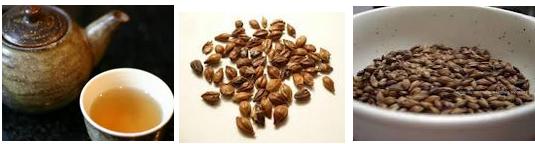
Toasted Barley Tea...
Bori cha (Korean)
Mugi cha (Japanese)
Benefits:
1. Lowers blood viscosity
2. Reduces S. Mutan colonizations--provides caries and cardiovascular protections
Buckwheat use:
1. Cover crop + weed control
2. Medicinal properties (potential adjunct tx for Type 2 Diabetes and high cholesterol)
3. Upholstery
4. Flour--in ethnic foods
Weed 101: Yellow Starthistle (Centaurea solstitialis)
 |
Yellow Starthistle |
Src: http://www.agf.gov.bc.ca/cropprot/weedguid/yellstar.htm
Control:
Weed eating goats
Src:http://www.ipm.ucdavis.edu/PMG/PESTNOTES/pn7402.html
Cover crops
Cover Crops: Options, Tips and Advantages forthe Home Garden
October/November 2009
http://www.motherearthnews.com/Organic-Gardening/Cover-Crops-Soil-Nutrients.aspx
By Barbara Pleasant

You can choose colorful cover crops, such as bachelor’s buttons and crimson clover, to build
your soil and beautify your beds.
ILLUSTRATION: ELAYNE SEARS
There are three main ways to improve your soil— grow cover crops, mulch the surface with biodegradable
mulches, and/or dig in organic soil amendments (such as compost, grass clippings, rotted manure or wood
chips). All have their advantages and none should be discounted, but cover cropping is the method least likely to be practiced in home gardens. There is a reason for this: Information on using cover crops is tailored to the needs of farmers who use tractors to make short work of mowing down or turning under cover crops. But when your main tools for taking down plants have wooden handles and you measure your space in feet rather than acres, you need a special set of cover crop plants, and special methods for using them.
How Cover Crops Help
A cover crop is any plant grown for the primary purpose of improving the soil. Since the early 1900s, farmers
have used cover crops to restore fertility to worn-out land. In addition to helping bulk up soil with organic matter, cover crops prevent erosion, suppress weeds, and create and cycle soil borne nutrients using the power of the sun. Recent advances in soil biology have revealed two more ways cover crops can improve soil.
Rhizodeposition is a special advantage to working with cover crops. Many plants actually release sugars and
other substances through their roots. They are like little solar engines, pumping energy down into the soil. With
vigorous cover crop plants, this process goes on much more deeply than you would ever dig — 6 feet for oats and rye! If you are leaving your garden beds bare in winter, you are missing the chance to use cold-hardy crops such as cereal rye or oats to solar-charge your soil. Thanks to this release of sugars, the root tips of many plants host colonies of helpful microorganisms, and as the roots move deeper, the microbes follow.
But so much for scientific talk. If you’ve experimented with cover crops, perhaps you have dug up young fava
beans or alfalfa seedlings to marvel at the nitrogen nodules on their roots, or watched a stand of buckwheat go from seed to bloom in four weeks flat. Or how about this one: It’s April and the soil is warming up and drying out. After loosening a clump of fall-sown wheat with a digging fork, you pull up a marvelous mop of fibrous roots and shake out the soil. What crumb! The soil’s structure is nothing short of amazing! These are the moments an organic gardener lives for.
Bio-drilling is what happens when you use a cover crop’s natural talents to “drill” into compacted subsoil. For
example, you might grow oilseed or daikon radishes as a cover crop where their spear-shaped roots will stab
deep into tight subsoil. Bio-drilling action also takes place when deeply rooted cover crop plants penetrate
subsoil and die. Then, the next crop grown may actually follow the rooting network mapped out by the cover
crop (see illustration in the Image Gallery). Maryland researchers were able to track this process using special
camera equipment (a minirhizotron), which took pictures of the interactions between cover crop (canola) and
crop plant (soybean) roots. As the canola’s deep roots decomposed, soybean roots followed the trails they
blazed in the subsoil, hand in glove. In addition to reduced physical resistance, the soybean roots probably
enjoyed better nutrition and the good company of legions of soil-dwelling microcritters, compliments of the cover crop.
Dozens of plants have special talents as cover crops, and if you live in an extremely hot, cold, wet or dry climate, you should check with your local farm store or state extension service for plant recommendations — especially if you want to use cover crops under high-stress conditions. Also be aware that many cover crop plants can become weedy, so they should almost always be taken down before they set seed.
How to Take Cover Crops Down
Speaking of taking down, this is the sticking point for most gardeners when it comes to cover crops, which is
why it’s a good idea to start small with your first cover crop plantings. Traditionally, cover crops are plowed
under, but most gardeners chop, cut or pull them, and use them for mulch or compost. Or you can assign the
task to a flock of pecking poultry. All are sound methods, and it is possible that composting cover crop plants
produces a more balanced soil amendment compared to chopping raw-crop residue directly into the soil. Pulling plants saves time, too, because you don’t have to wait three weeks (or more) to plant, in order to avoid possible negative reactions between rotting plant residues and the plants you want to grow. For example, the cover crop known as sudex (a fast-growing sorghum-Sudan grass hybrid) produces gargantuan amounts of biomass (leaf, stem and roots), but fresh sudex residue in the soil inhibits the growth of tomatoes, lettuce and broccoli. Oats, wheat and other cover crop plants also produce allelopathic substances that can temporarily hinder the germination and growth of other plants, too, but not in quantities sufficient to cause serious disturbances in the garden. If you chop in fresh cover crop residues, just plan to wait two to three weeks before sowing crop seeds.
Top Cover Crop Options
The following cover crops work well in a wide range of climates and situations, and they’re not hard to take
down, as long as you do it at the right time and in the proper way. We’ve selected these six because they are
easy to manage using hand tools, grow during different seasons and provide multiple benefits in the garden.
During the summer, buckwheat (Fagopyron esculentum) is in a class by itself as a cover crop. Seeds sown in
moist soil turn into a weed-choking sea of green within a week, with many plants growing 2 feet high or more
and blooming in less than 30 days. Should you need to reclaim space that has been overtaken by invasives,
buckwheat can be your best friend. In my garden, buckwheat has been a huge ally in cleaning up a spot overrun by dock, bindweed and other nasties that grow in warm weather. For two years, each time the noxious weeds grew back, I dug them out and planted more buckwheat. Throughout the battle, the buckwheat attracted bees and other buzzers in droves. Fortunately, even mature buckwheat plants are as easy to take down as impatiens — simply pull the succulent plants with a twist of the wrist, or use a hoe or scythe to slice them off at the soil line. You can let the dead plants die into a surface mulch and plant through them, gather them up and compost them, or chop them into the soil.
In late summer, while the soil is still warm, you have a fine opportunity to try barley (Hordeum vulgare), a fastgrowing grain that’s great for capturing excess nitrogen left over from summer crops, which might otherwise leach away during the winter. Barley often suffers from winter injury in Zone 6, and is often killed altogether in Zone 5 and above. This is good! The dead barley residue shelters the soil through winter, and dries into a plantthrough mulch in spring in cold zones.
Early fall is the best time to grow the dynamic duo of soil-building cover crops — oats (Avena sativa) mixed
with cold-hardy winter peas (Pisum sativum). When taken down just before the peas start blooming in spring,
an oat/pea combination cover crop is the best way to boost your soil’s organic matter and nutrient content using only plants. Both make a little fall growth when planted in September, and in spring the peas scramble up the oats. On the down side, one or both crops can be winterkilled before they have a chance to do much good north of Zone 5, and in more hospitable climates it will take some work to get the plants out of the way in spring. Do it by mid-April, because the job gets tougher as the plants get older. Cut or mow them down first, and then pull and dig your way through the planting. A heavy-duty chopping hoe works well for this.
Hairy vetch (Vicia villosa) needs a good head start on winter, too, but it’s hardy to Zone 4 and gives a huge
payback in terms of soil improvement, and saved time and labor. Unlike many other cover crop plants, you can quickly kill hairy vetch by slicing just below the crown with a sharp hoe. When hairy vetch is beheaded about a month before it’s time to plant tomatoes and peppers, you can open up planting holes and plant through the dried mulch — no digging required.
Late fall is not a lost season for cover crops, but in most climates you’re limited to cereal rye (Secale cereale),
the cold-hardiest of them all. Rye will sprout after the soil has turned chilly, but be sure to take it out early in
spring, before the plants develop tough seed stalks. Or let your chickens keep it trimmed; leave the birds on the patch longer in spring and they will kill the rye for you. If you’re looking for a cover crop you can plant in
October for cold-season poultry greens, cereal rye is probably the best choice.
In any season, you may find many more great cover crops in seed catalogs, or among your leftover seeds. As
you consider possibilities, think about plants that quickly produce an abundance of leaves and stems, but are easy to pull up or chop down if you decide you don’t want them. Bush beans, leafy greens or even sweet corn can be grown as short-term cover crops, along with annual flowers such as calendulas and borage in early spring, or marigolds and sunflowers in summer. Teaming up a flower with a cover crop plant is always fun, whether you’re planting sulphur cosmos with cowpeas in summer, oats with dwarf sunflowers in late summer or bachelor’s buttons with crimson clover in the fall. Whatever you do, just don’t leave your soil bare or you’ll be missing out on a chance to capture solar energy to recharge your food web.
October/November 2009
http://www.motherearthnews.com/Organic-Gardening/Cover-Crops-Soil-Nutrients.aspx
By Barbara Pleasant

You can choose colorful cover crops, such as bachelor’s buttons and crimson clover, to build
your soil and beautify your beds.
ILLUSTRATION: ELAYNE SEARS
There are three main ways to improve your soil— grow cover crops, mulch the surface with biodegradable
mulches, and/or dig in organic soil amendments (such as compost, grass clippings, rotted manure or wood
chips). All have their advantages and none should be discounted, but cover cropping is the method least likely to be practiced in home gardens. There is a reason for this: Information on using cover crops is tailored to the needs of farmers who use tractors to make short work of mowing down or turning under cover crops. But when your main tools for taking down plants have wooden handles and you measure your space in feet rather than acres, you need a special set of cover crop plants, and special methods for using them.
How Cover Crops Help
A cover crop is any plant grown for the primary purpose of improving the soil. Since the early 1900s, farmers
have used cover crops to restore fertility to worn-out land. In addition to helping bulk up soil with organic matter, cover crops prevent erosion, suppress weeds, and create and cycle soil borne nutrients using the power of the sun. Recent advances in soil biology have revealed two more ways cover crops can improve soil.
Rhizodeposition is a special advantage to working with cover crops. Many plants actually release sugars and
other substances through their roots. They are like little solar engines, pumping energy down into the soil. With
vigorous cover crop plants, this process goes on much more deeply than you would ever dig — 6 feet for oats and rye! If you are leaving your garden beds bare in winter, you are missing the chance to use cold-hardy crops such as cereal rye or oats to solar-charge your soil. Thanks to this release of sugars, the root tips of many plants host colonies of helpful microorganisms, and as the roots move deeper, the microbes follow.
But so much for scientific talk. If you’ve experimented with cover crops, perhaps you have dug up young fava
beans or alfalfa seedlings to marvel at the nitrogen nodules on their roots, or watched a stand of buckwheat go from seed to bloom in four weeks flat. Or how about this one: It’s April and the soil is warming up and drying out. After loosening a clump of fall-sown wheat with a digging fork, you pull up a marvelous mop of fibrous roots and shake out the soil. What crumb! The soil’s structure is nothing short of amazing! These are the moments an organic gardener lives for.
Bio-drilling is what happens when you use a cover crop’s natural talents to “drill” into compacted subsoil. For
example, you might grow oilseed or daikon radishes as a cover crop where their spear-shaped roots will stab
deep into tight subsoil. Bio-drilling action also takes place when deeply rooted cover crop plants penetrate
subsoil and die. Then, the next crop grown may actually follow the rooting network mapped out by the cover
crop (see illustration in the Image Gallery). Maryland researchers were able to track this process using special
camera equipment (a minirhizotron), which took pictures of the interactions between cover crop (canola) and
crop plant (soybean) roots. As the canola’s deep roots decomposed, soybean roots followed the trails they
blazed in the subsoil, hand in glove. In addition to reduced physical resistance, the soybean roots probably
enjoyed better nutrition and the good company of legions of soil-dwelling microcritters, compliments of the cover crop.
Dozens of plants have special talents as cover crops, and if you live in an extremely hot, cold, wet or dry climate, you should check with your local farm store or state extension service for plant recommendations — especially if you want to use cover crops under high-stress conditions. Also be aware that many cover crop plants can become weedy, so they should almost always be taken down before they set seed.
How to Take Cover Crops Down
Speaking of taking down, this is the sticking point for most gardeners when it comes to cover crops, which is
why it’s a good idea to start small with your first cover crop plantings. Traditionally, cover crops are plowed
under, but most gardeners chop, cut or pull them, and use them for mulch or compost. Or you can assign the
task to a flock of pecking poultry. All are sound methods, and it is possible that composting cover crop plants
produces a more balanced soil amendment compared to chopping raw-crop residue directly into the soil. Pulling plants saves time, too, because you don’t have to wait three weeks (or more) to plant, in order to avoid possible negative reactions between rotting plant residues and the plants you want to grow. For example, the cover crop known as sudex (a fast-growing sorghum-Sudan grass hybrid) produces gargantuan amounts of biomass (leaf, stem and roots), but fresh sudex residue in the soil inhibits the growth of tomatoes, lettuce and broccoli. Oats, wheat and other cover crop plants also produce allelopathic substances that can temporarily hinder the germination and growth of other plants, too, but not in quantities sufficient to cause serious disturbances in the garden. If you chop in fresh cover crop residues, just plan to wait two to three weeks before sowing crop seeds.
Top Cover Crop Options
The following cover crops work well in a wide range of climates and situations, and they’re not hard to take
down, as long as you do it at the right time and in the proper way. We’ve selected these six because they are
easy to manage using hand tools, grow during different seasons and provide multiple benefits in the garden.
During the summer, buckwheat (Fagopyron esculentum) is in a class by itself as a cover crop. Seeds sown in
moist soil turn into a weed-choking sea of green within a week, with many plants growing 2 feet high or more
and blooming in less than 30 days. Should you need to reclaim space that has been overtaken by invasives,
buckwheat can be your best friend. In my garden, buckwheat has been a huge ally in cleaning up a spot overrun by dock, bindweed and other nasties that grow in warm weather. For two years, each time the noxious weeds grew back, I dug them out and planted more buckwheat. Throughout the battle, the buckwheat attracted bees and other buzzers in droves. Fortunately, even mature buckwheat plants are as easy to take down as impatiens — simply pull the succulent plants with a twist of the wrist, or use a hoe or scythe to slice them off at the soil line. You can let the dead plants die into a surface mulch and plant through them, gather them up and compost them, or chop them into the soil.
In late summer, while the soil is still warm, you have a fine opportunity to try barley (Hordeum vulgare), a fastgrowing grain that’s great for capturing excess nitrogen left over from summer crops, which might otherwise leach away during the winter. Barley often suffers from winter injury in Zone 6, and is often killed altogether in Zone 5 and above. This is good! The dead barley residue shelters the soil through winter, and dries into a plantthrough mulch in spring in cold zones.
Early fall is the best time to grow the dynamic duo of soil-building cover crops — oats (Avena sativa) mixed
with cold-hardy winter peas (Pisum sativum). When taken down just before the peas start blooming in spring,
an oat/pea combination cover crop is the best way to boost your soil’s organic matter and nutrient content using only plants. Both make a little fall growth when planted in September, and in spring the peas scramble up the oats. On the down side, one or both crops can be winterkilled before they have a chance to do much good north of Zone 5, and in more hospitable climates it will take some work to get the plants out of the way in spring. Do it by mid-April, because the job gets tougher as the plants get older. Cut or mow them down first, and then pull and dig your way through the planting. A heavy-duty chopping hoe works well for this.
Hairy vetch (Vicia villosa) needs a good head start on winter, too, but it’s hardy to Zone 4 and gives a huge
payback in terms of soil improvement, and saved time and labor. Unlike many other cover crop plants, you can quickly kill hairy vetch by slicing just below the crown with a sharp hoe. When hairy vetch is beheaded about a month before it’s time to plant tomatoes and peppers, you can open up planting holes and plant through the dried mulch — no digging required.
Late fall is not a lost season for cover crops, but in most climates you’re limited to cereal rye (Secale cereale),
the cold-hardiest of them all. Rye will sprout after the soil has turned chilly, but be sure to take it out early in
spring, before the plants develop tough seed stalks. Or let your chickens keep it trimmed; leave the birds on the patch longer in spring and they will kill the rye for you. If you’re looking for a cover crop you can plant in
October for cold-season poultry greens, cereal rye is probably the best choice.
In any season, you may find many more great cover crops in seed catalogs, or among your leftover seeds. As
you consider possibilities, think about plants that quickly produce an abundance of leaves and stems, but are easy to pull up or chop down if you decide you don’t want them. Bush beans, leafy greens or even sweet corn can be grown as short-term cover crops, along with annual flowers such as calendulas and borage in early spring, or marigolds and sunflowers in summer. Teaming up a flower with a cover crop plant is always fun, whether you’re planting sulphur cosmos with cowpeas in summer, oats with dwarf sunflowers in late summer or bachelor’s buttons with crimson clover in the fall. Whatever you do, just don’t leave your soil bare or you’ll be missing out on a chance to capture solar energy to recharge your food web.
Subscribe to:
Posts (Atom)